 listicle
Best Gamified Coding & Math Platforms for K-8
Table of Contents
- Quick Comparison: Gamified Coding and Math Platforms for K-8
- CodeAlgo Academy: Coding, Math, and AI Literacy in One K-8 Platform
- Prodigy Math and SplashLearn: Game-Based Math Practice
- Scratch and Code.org: Free Coding Platforms for Elementary and Middle School
- Khan Academy, Legends of Learning, and Beast Academy: Adaptive and Standards-Aligned Options
- The Benefits of Gamified Learning in K-8
- Integrating Coding Into Math Curriculum: Practical Approaches
- Best Practices for Classroom Screen Time
- Frequently Asked Questions
Last Updated: October 21, 2026

Quick Comparison: Gamified Coding and Math Platforms for K-8
Choosing between gamified coding and math platforms for K-8 students that align with Common Core standards comes down to one question: does the game serve the learning, or does the learning get buried under the game? At CodeAlgo Academy, we built our platform around the first answer. Here are the options teachers, homeschool parents, and curriculum directors ask about most.
Here is the short version before the detail:
| Platform | Best For | Coding | Math | Common Core | Pricing |
|---|---|---|---|---|---|
| CodeAlgo Academy | Coding, math, and AI literacy in one K-8 platform | Yes | Yes | Aligned (plus CSTA) | See pricing page; free trial |
| Prodigy Math | Game-based math practice | No | Yes | Described as curriculum-aligned | Not specified in our research |
| SplashLearn | Math games plus digital worksheets | No | Yes | Stated as Common Core aligned | Reported around $8/month |
| Scratch | Free creative coding for elementary and middle school | Yes | No | Not verified | Free |
| Code.org | Free introductory coding | Yes | No | Not verified | Free |
| Khan Academy | Free adaptive math practice | No | Yes | Not verified | Free |
| Legends of Learning | Standards-based science and math games | No | Yes | Assignable by standard | Free access reported |
| Beast Academy | Novel, somewhat gamified math | No | Yes | Not verified | Not specified in our research |
CodeAlgo Academy: Coding, Math, and AI Literacy in One K-8 Platform
Most platforms on this list do one thing well.
The feature that matters most to teachers: no coding background is required to facilitate a lesson, removing the biggest barrier elementary teachers face when handed a coding mandate without training.
- Game-based learning for K-8 students, with adaptive learning paths
- Measurable math assessment growth, so progress is visible to administrators
- Classroom tools for assigning activities and tracking student progress
- Healthy, purposeful screen time built into the lesson design
Pricing is listed on our website and a free trial is available, so a small charter school can test it before committing budget.
Prodigy Math and SplashLearn: Game-Based Math Practice
Prodigy Math turns math practice into fantasy battles and quests: students answer problems to defeat monsters, keeping practice feeling like play. Our research describes it as curriculum-aligned and adaptive to each student's pace.
SplashLearn pairs interactive math games with digital worksheets and states that its content aligns with Common Core standards.
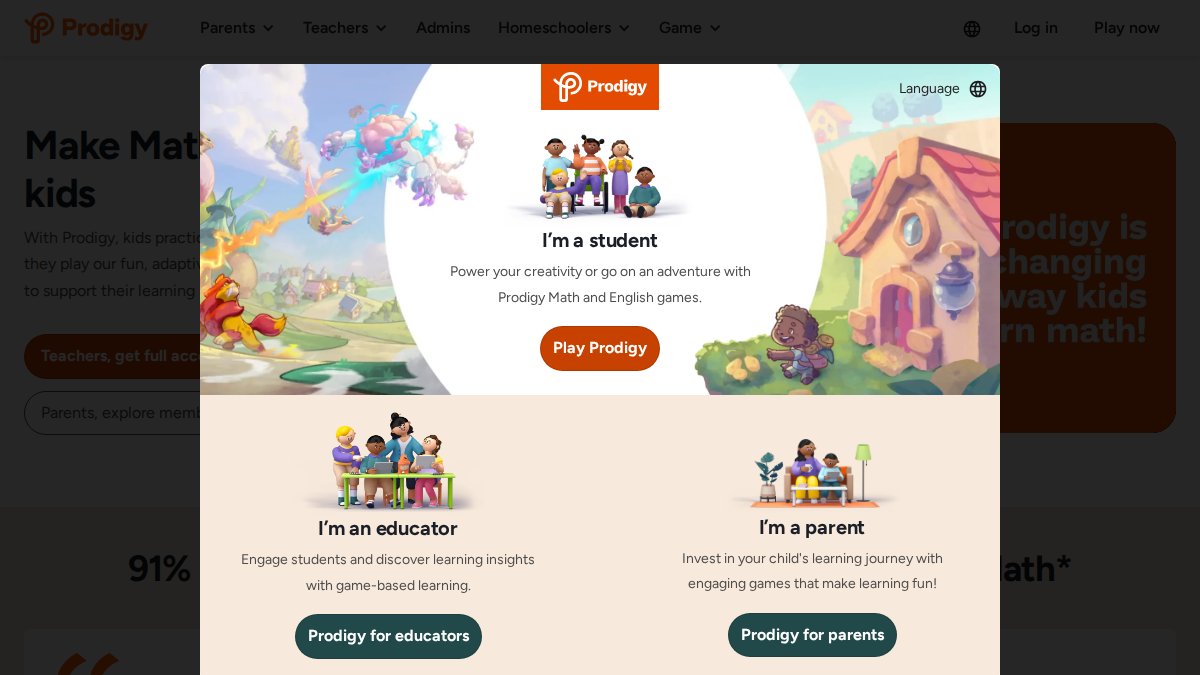
Which one fits? Prodigy suits students who need motivation more than instruction. SplashLearn suits teachers who want game practice backed by printable and digital worksheet follow-up. Neither teaches coding.
Scratch and Code.org: Free Coding Platforms for Elementary and Middle School
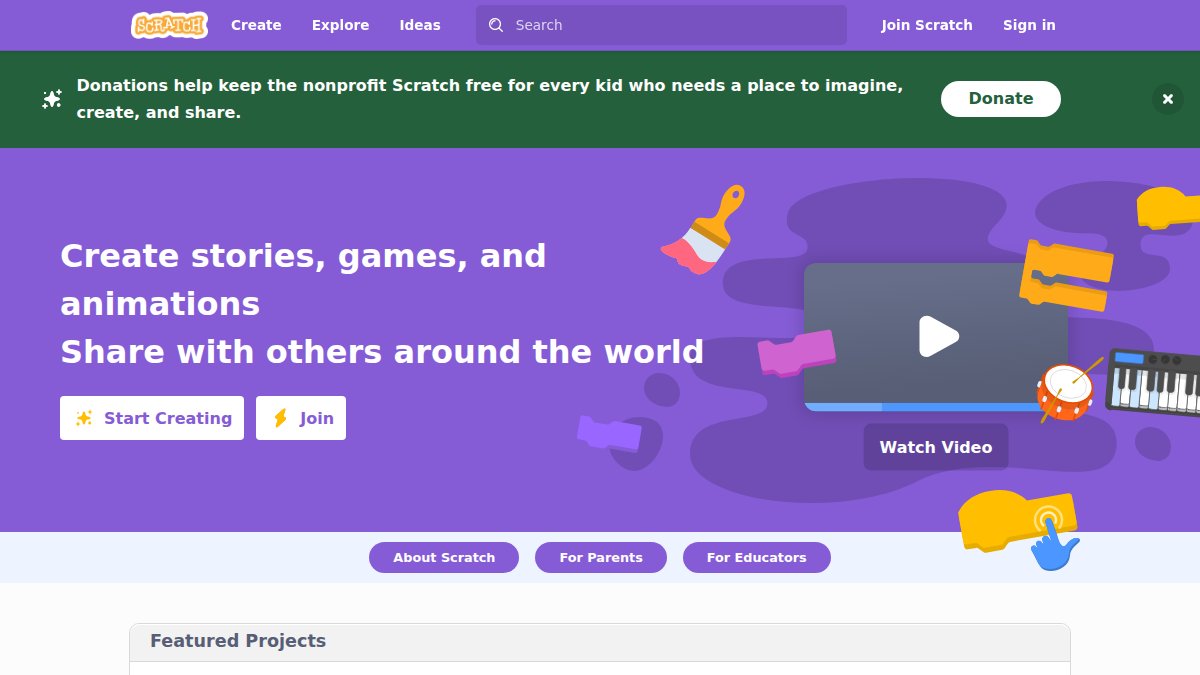
Free is hard to argue with, and both Scratch and Code.org deliver real value. Scratch, from MIT, lets elementary and middle school students build projects with drag-and-drop blocks while learning core coding concepts.
The honest limitation: neither is a math platform, and the material we reviewed does not verify Common Core alignment for either.
If your goal is a single platform that covers coding and math together, these two leave a gap.
Khan Academy, Legends of Learning, and Beast Academy: Adaptive and Standards-Aligned Options
Khan Academy remains the default free math option for good reason: it is adaptive, covers everything from basic arithmetic through AP Calculus and SAT preparation, and costs nothing.
Legends of Learning takes the opposite approach: hundreds of games for science and math, assignable by standard, with free access reported in the sources we reviewed.
Beast Academy rounds out the group with a novel, somewhat gamified math experience.

The Benefits of Gamified Learning in K-8
Gamified learning works because it changes what students are willing to do repeatedly. Practice is the engine of math fluency, and games make repetition feel like progress rather than punishment.
The benefits show up in four places, each with a concrete mechanism:
- Engagement and motivation rise when students can see progress. Look for visible progress indicators, levels, mastery bars, or skill trees, that map to specific standards rather than generic points. A platform that rewards correct thinking (for example, unlocking the next coding challenge only after a student demonstrates understanding of a math concept) sustains motivation longer than one that rewards speed or clicking.
- Problem solving and computational thinking develop through puzzles and coding challenges. The mechanism is debugging: when a student's code fails, they must read the error, form a hypothesis, test a fix, and iterate. That cycle mirrors the Common Core mathematical practice of making sense of problems and persevering in solving them (CCSS.MATH.PRACTICE.MP1) (Standards for Mathematical Practice). Platforms that surface the debugging process teach transferable reasoning, not just syntax.
- Personalized learning becomes possible when adaptive practice adjusts to each student. The mechanism is diagnostic branching: a well-designed platform detects a wrong answer, identifies the likely misconception, and routes the student to a scaffolded sub-skill before returning to grade-level content. Ask vendors how their adaptivity works, rule-based branching, item-response theory, or something else, because the quality of the adaptation determines whether students get true remediation or just more of the same.
- Measurable outcomes are the benefit most guides skip. Engagement is easy to claim; evidence is harder. When you evaluate a platform, ask for three things: (1) pre/post assessment data from a comparable district or grade band, (2) examples of standards-aligned item banks or coding rubrics, and (3) a clear description of how progress data maps back to grade-level Common Core domains such as Operations and Algebraic Thinking or Geometry. A platform that cannot produce these artifacts is asking you to take engagement on faith.
The catch most guides skip: gamification only helps if the game is tied to learning objectives. A game that rewards clicking fast teaches clicking fast.
Integrating Coding Into Math Curriculum: Practical Approaches
The strongest argument for teaching coding alongside math is that coding makes math practices visible: computational thinking, sequencing, and debugging map directly onto the Common Core mathematical practices of problem solving, reasoning, and modeling.
Grade-band mappings between coding activities and Common Core math standards
- Grades K-2 (Counting and Cardinality; Operations and Algebraic Thinking). A block-based sequence that moves a character forward a set number of steps reinforces counting, one-to-one correspondence, and early addition (CCSS.MATH.CONTENT.K.CC.B.4 and 1.OA.C.6). When students debug a sequence that overshoots the target, they are practicing the mathematical practice of attending to precision (MP6).
- Grades 3-5 (Operations and Algebraic Thinking; Geometry). A shape-drawing project, using loops and turns to draw polygons, reinforces angle measurement, multiplication as repeated addition, and the properties of shapes (CCSS.MATH.CONTENT.3.G.A.1 and 4.G.A.1). A loop that repeats a turn-and-draw block is a concrete model of multiplication and of the pattern standard 4.OA.C.5.
- Grades 6-8 (Ratios and Proportional Relationships; Expressions and Equations). A simulation project, for example, modeling a constant speed or a proportional relationship, gives students a reason to write and evaluate expressions and to reason about rates (CCSS.MATH.CONTENT.6.RP.A.3 and 7.EE.B.4). Debugging a simulation that produces the wrong output is a direct exercise in the mathematical practice of constructing viable arguments and critiquing the reasoning of others (MP3).
These mappings are not exhaustive, but they show the principle: the coding activity should be chosen because it makes a specific math standard visible, not because it is fun in isolation.
Three approaches that work in real classrooms
- Pair a coding project with a math unit. A shape-drawing project reinforces geometry vocabulary and angle measurement. Schedule it in the same week as the geometry unit so students encounter the vocabulary in both contexts; repetition across modalities makes the standard stick.
- Use coding as the reward block. Students who finish math practice unlock project time, turning coding into motivation. The math practice must be standards-aligned and diagnostic, otherwise the reward block rewards completion rather than understanding.
- Assign one combined platform instead of two. Fewer logins means more instructional minutes and simpler progress tracking. When coding and math live in the same platform, a teacher can see whether a student who struggles with a coding loop also struggles with the underlying multiplication standard, a cross-subject insight that two separate tools cannot provide.
A final practical note on evidence: when you pilot a combined coding-and-math platform, collect the same three artifacts you would for a math-only tool, pre/post data on a narrow standard, examples of standards-aligned coding rubrics, and a description of how progress data maps to grade-level domains. A platform that produces those artifacts for both subjects is doing the integration work; one that cannot is offering two products in one login.
Best Practices for Classroom Screen Time
Screen time in K-8 works when it is purposeful, chunked, and visible. Long, unstructured sessions let students drift between activities. Aim for short blocks tied to a specific learning objective, with a teacher check-in at the end.
Practices we recommend:
- Cap sessions at a length that matches attention spans. Younger students need shorter blocks than middle schoolers.
- Set a goal before devices open. "Finish this quest and explain one thing you learned" beats "play for twenty minutes."
- Review progress data weekly. Adaptive platforms generate progress tracking and student assessment data. Use it to adjust lesson plans.
- Balance screens with hands-on activities. Unplugged coding games and paper math puzzles reinforce the same concepts.
Device requirements matter too. Confirm your platform runs on the hardware you actually have before planning a rollout, and check accessibility options. CodeAlgo Academy runs on web, iOS, and Android, covering most classroom device setups.
The real challenge is not finding a gamified platform. That is exactly the problem CodeAlgo Academy was built to solve: a standards-aligned K-8 curriculum spanning coding, math, and AI literacy, with no coding background required for teachers, adaptive learning paths, and progress data you can show your board.
Frequently Asked Questions
What are some good gamified learning platforms for K-8 students?
Several options stand out depending on your goal. CodeAlgo Academy combines gamified coding, math, and AI literacy in one K-8 platform aligned to Common Core and CSTA standards. Prodigy Math and SplashLearn focus on game-based math practice, while Scratch and Code.org offer free coding activities for elementary and middle school learners. Khan Academy provides free adaptive math practice across a broad range of levels. Compare each platform's grade suitability, standards alignment, and pricing before choosing.
How do gamified platforms support Common Core math standards?
The strongest gamified platforms map their activities to specific grade-level standards, so each quest, game, or problem set reinforces a measurable learning objective. SplashLearn states its content aligns with Common Core standards, and CodeAlgo Academy aligns its curriculum to CCSS alongside CSTA standards. When evaluating a platform, ask for a standard-by-grade mapping rather than a general alignment claim, and check whether progress tracking reports student mastery against those standards.
What is the best coding game app for kids?
The right app depends on age and whether you need math integration. Scratch and Code.org use game-like elements to teach coding concepts to elementary and middle school learners and are widely used in classrooms. CodeAlgo Academy offers game-based coding, math, and AI literacy on web, iOS, and Android, with adaptive learning paths and no coding background required for teachers. For families, check device requirements and whether progress reports are available before committing.
Why is AI literacy important in K-8 coding education?
AI literacy gives students a working understanding of how the tools they already use make decisions, which builds critical thinking and problem-solving skills early. Platforms that combine coding with AI concepts help K-8 learners move from consuming technology to understanding it. CodeAlgo Academy builds AI literacy into its game-based curriculum alongside coding and math. For schools, this means one platform can support computer science, math practice, and digital literacy goals without adding another subscription.