 how-to
How to Use Math Games for Formative Assessment
Last Updated: October 26, 2026
Quick Summary
Math games support formative assessment by generating visible evidence of student thinking every few minutes, so you can observe strategies, spot misconceptions, and adjust instruction during learning. Research notes games can increase participation and motivate students to take risks, but a high score alone is not proof of mastery.
- Name one target skill and one likely misconception before the lesson begins.
- Keep play to ten to fifteen minutes, then close with a single exit problem.
- Record only student name, strategy, error, and next step on one page.
- Cross-check game performance against one explanation and one exit problem.
- Sort notes into got it, almost, and not yet, then plan around the middle group.
Table of Contents
- Why Math Games Work as Formative Assessment
- Formative Assessment Strategies for Math That Start With a Game
- Math Assessment Activities You Can Run Tomorrow
- Math Games to Check Student Understanding in Real Time
- Coding Games for Math Learning: Where Fluency Meets Logic
- Turning Game Evidence Into Instructional Decisions
- Bringing Game-Based Formative Assessment Into Your Classroom
- Frequently Asked Questions
Why Math Games Work as Formative Assessment
Math games turn play into evidence. That is the core idea behind using math games for formative assessment, and it is why so many K-8 teachers now build them into weekly routines.
At CodeAlgo Academy, we design game-based lessons for K-8 classrooms, so we think about this constantly. What makes a game useful for assessment is not the fun. It is the visible thinking it produces. For the deeper case, see benefits of game based learning math.
The research base is real, though modest. A CRESST study on games as formative assessment environments worked with 164 participants and looked at how the detail in a game's scoring rules shaped math learning, game performance, and help-seeking through feedback.
Formative assessment is the practice of gathering evidence of student understanding during learning, then adjusting instruction based on what you find. Math games fit that definition well because they generate evidence every few minutes.
What the Research Says About Game-Based Learning
The evidence points in one direction: games support participation and practice, and they open a window into student reasoning. Edutopia's overview of game-based learning research notes that games in teaching can increase participation, support social and emotional learning, and motivate students to take risks.
Other work is more specific. A 2023 dissertation indexed by OhioLINK examined gamification for formative assessment in elementary math. And a study in the International Journal of Education in Mathematics, Science and Technology reported positive effects of gamified formative-assessment tasks on motivation and higher-order thinking, without a stated effect size.
Our reading of that body of work: games are strong for engagement and for surfacing student strategies. For a closer look at which tools actually carry research backing, see our review of evidence based math learning tools.
Formative Assessment Strategies for Math That Start With a Game
Start with the evidence you want, not the game you want to play. That single flip changes everything about how a game session runs. Most teachers pick a fun game and then hunt for something to assess. Reverse it.
Here is the short list of formative assessment strategies for math that pair well with games:
- Observation checklists tied to one target skill per session
- Exit tickets with a single problem modeled on the game
- Think-aloud prompts ("Tell me how you got that")
- Error analysis of wrong answers students made during play
- Peer talk capture during partner games
- Self-monitoring where students rate their own confidence
Pick two. Two strategies run well beat six run badly.
A Five-Step Routine for Any Game
This is the routine we would use in any K-8 classroom, with any game, digital or offline.
- Name the target. Choose one skill and one likely misconception. Write both down before the lesson.
- Play short. Ten to fifteen minutes of play, no more. Long sessions produce fatigue, not evidence.
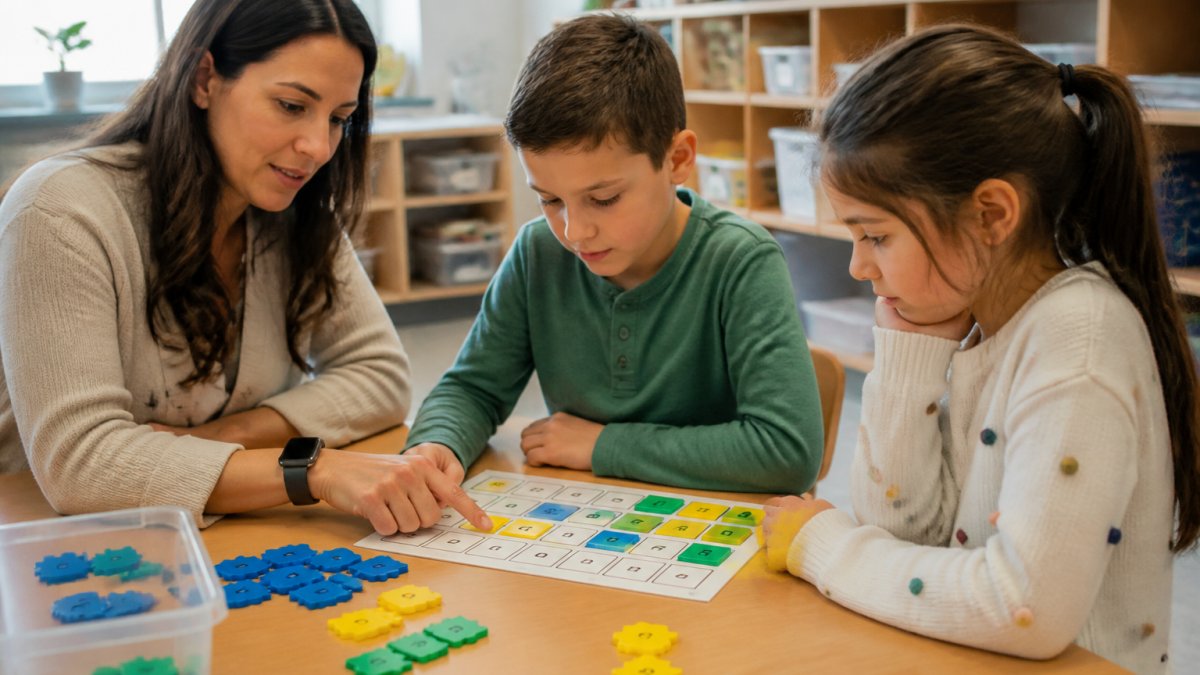
- Circulate and listen. Move between groups with a clipboard. Record what students say, not just what they answer.
- Pause and probe. Stop play once, mid-game, and ask two groups to explain a strategy.
- Close with one problem. Give a single exit problem that mirrors the game's core skill.
Watch out: the most common mistake is treating game time as a break from teaching. If you do not circulate with a purpose, you get a fun twenty minutes and zero usable evidence.
Math Assessment Activities You Can Run Tomorrow
You do not need new software to start. Three low-prep activities cover most formative needs, and all three work with materials already in your room.
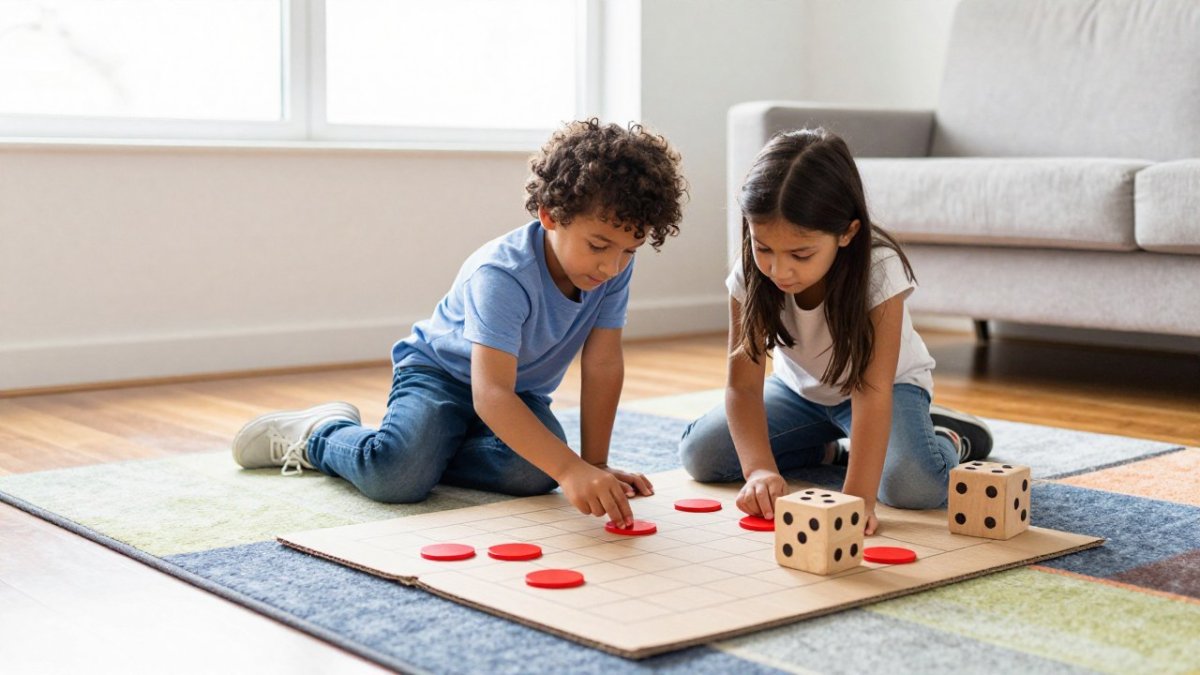
- Dice and counters race. Pairs roll, build numbers, and compare. You listen for place-value language.
- Card sort showdown. Teams sort expressions into true and false piles. Wrong piles reveal misconceptions fast.
- Board game with a twist. Play a simple path game, but require students to explain each move before taking it.
If you want ready-made, standards-aligned options, our collection of engaging math games for elementary students is built for exactly this kind of short, purposeful session.
What to Capture While Students Play
Capture less than you think you should. One page, one skill, four columns.
| What to record | Example entry | Why it matters |
|---|---|---|
| Student name | Maya R. | Ties evidence to a learner |
| Strategy used | Counted on from 8 | Shows mathematical thinking |
| Error or misconception | Added digits separately | Points to the fix |
| Next step | Reteach regrouping | Drives instruction |
That table is your whole assessment tool. Copy it onto paper or a shared doc and reuse it all term. The columns do the work: strategy, error, next step. Everything else is noise.
Math Games to Check Student Understanding in Real Time
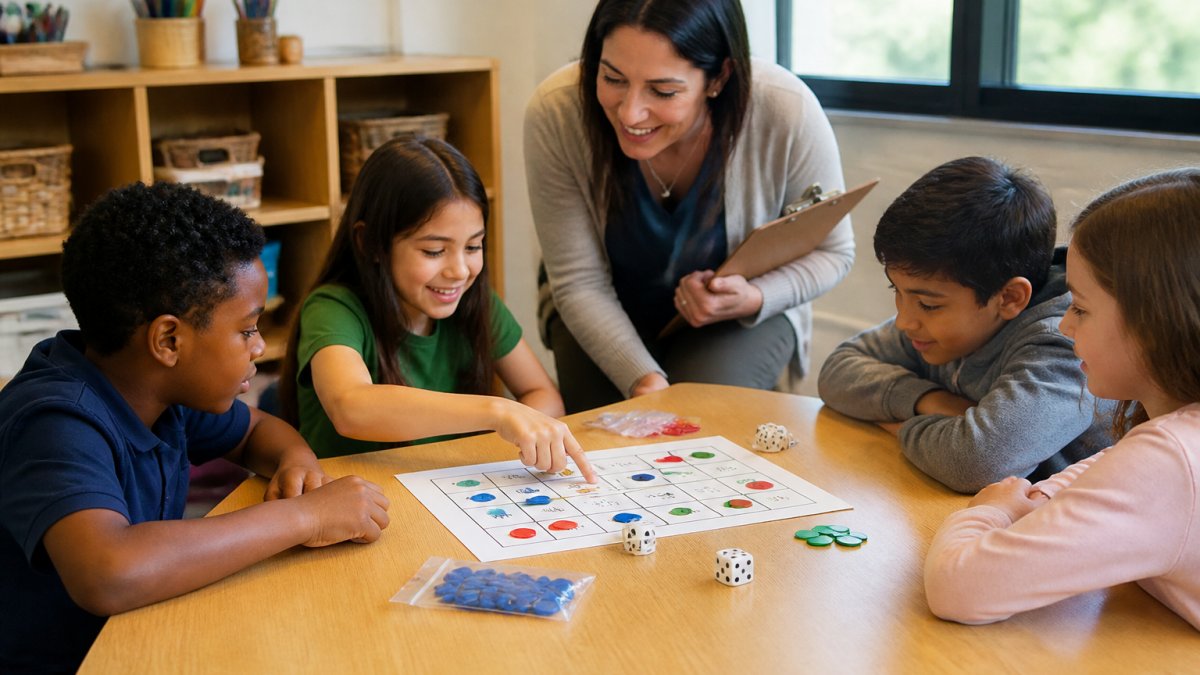
Real-time checks work best when the game forces a decision every turn. Games where students wait a long time between moves hide their thinking. Games with quick turns expose it.
Distinguishing Understanding From Luck and Speed
Ask three questions about any strong-looking performance:
- Can the student explain it? A correct answer with no reasoning is a guess until proven otherwise. Prompt with "Walk me through how you decided that."
- Can the student repeat it? A strategy that works once but not on the next turn is often luck. Watch for the same approach applied to a new problem.
- Can the student transfer it? Ask for a different way to get the same answer, or change one number and see if the approach holds.
A student who is fast but cannot explain, repeat, or transfer is guessing. A student who is slow but can do all three is reasoning, and may need more time, not more practice.
Signals Worth Noting During Play
- Speed without explanation. Fast answers with no reasoning often mean guessing.
- Strategy shifts. A student who changes approach mid-game is learning.
- Peer correction. When one student fixes another's error, that is peer learning you can note.
- Frustration points. Where a student stalls is where the misconception lives.
- Mimicry. A student copying a partner's move without explanation is not yet showing understanding.
Digital vs. Offline Games: Trade-Offs That Affect Evidence Quality
| Dimension | Offline games | Digital games |
|---|---|---|
| Setup time | Low, dice, cards, counters | Higher, devices, logins, connectivity |
| Evidence quality | Rich talk and strategy visible if you circulate | Logs attempts and time on task, but may hide reasoning |
| Accessibility | Easy to adapt with concrete materials | Depends on device, input method, and text load |
| Privacy | No student data collected | Platform may store names, attempts, and time data |
| Best for | Observing collaboration and think-alouds | Tracking practice volume and patterns over time |
Digital games add a second layer: most log attempts and time on task. Use those logs as a starting point, not a verdict. Pair the log with one observation and you have a real picture. Before adopting any platform, check what student data it collects, where it is stored, whether parents can review it, and whether the district has approved it. A game that produces great data but violates your district's privacy rules is not a formative assessment tool, it is a liability.
If you are choosing a platform, our comparison of gamified coding and math platforms for K-8 covers what to look for, including data and privacy considerations.
Coding Games for Math Learning: Where Fluency Meets Logic
Coding games sit at an unusual intersection: they demand computational fluency and mathematical reasoning at the same time.
That is why we built CodeAlgo Academy around game-based coding and math for K-8.
The practical benefit for assessment is depth. A coding task shows you a student's strategy in sequence, not just a final answer. To go deeper on that connection, read how coding helps kids with math and problem-solving.
Turning Game Evidence Into Instructional Decisions
Evidence only counts if it changes what you do next. That is the whole point of formative assessment, and it is where most game sessions quietly fail. Teachers collect observations, then teach the same lesson to everyone anyway.
Try sorting your notes into three groups after each session:
- Got it. These students need extension, not repetition.
- Almost. One specific fix will move them. Reteach that fix in a small group.
- Not yet. These students need a different entry point, often with concrete materials.
Then plan the next lesson around the middle group, because they are the largest and the most movable. The National Council of Teachers of Mathematics notes that repeated games support computational fluency, which means replaying a game after reteaching is a legitimate instructional move, not a time filler.
One more habit worth building: track the same skill across four to six weeks. A single session tells you about today. A pattern tells you whether the game is actually producing learning progress.
Bringing Game-Based Formative Assessment Into Your Classroom
Start smaller than feels satisfying. One game, one skill, one capture sheet, one week. Then add a second game only after the first routine runs without thinking.
Three practical guardrails:
- Keep sessions short. Ten to fifteen minutes of play plus five minutes of close.
- Protect the debrief. The conversation after play is where learning gets named.
- Involve students in goal setting. Students who rate their own confidence build self-monitoring skills that outlast any single game.
If you want a platform that handles the game design, standards alignment, and progress tracking in one place, that is what we built CodeAlgo Academy to do.
The challenge is not finding games. It is building a routine that turns play into evidence you actually use.
Frequently Asked Questions
How can math games be used for formative assessment?
Run the game, then watch for evidence. Circulate while students play and note the strategies they use, the errors they repeat, and the questions they ask. A five-step routine works well: set a clear learning target, model the game once, let students play in pairs, capture two or three observations per group, and close with a quick debrief. The game itself is the activity; your notes and the students' talk are the assessment. That evidence then shapes tomorrow's warm-up or small-group work.
What math skills can teachers assess through classroom games?
Games surface more than right answers. You can observe computational fluency during repeated play, problem-solving when students hit a tricky turn, mathematical reasoning when they explain a move, and collaboration during pair games. Error analysis is especially rich: a student who miscounts in a dice game shows you exactly where place value or counting on breaks down. Pair a game with a short exit question and you have evidence on both procedure and understanding.
How can coding games for math learning support assessment?
Coding games ask students to build sequences, debug, and reason about order and quantity, which maps closely to math standards. When a student programs a character to move a set number of steps, you can see whether they understand number lines and direction. Platforms like CodeAlgo Academy align to Common Core and CSTA standards and log student progress, giving teachers assessment evidence without extra grading. That record helps you spot misconceptions and respond with targeted practice.
Are math games effective for elementary students?
Research points that way. A CRESST study of 164 participants examined games as formative-assessment environments and looked at math achievement, game performance, and help-seeking through feedback. The National Council of Teachers of Mathematics notes that repeated games support computational fluency and give students practice. Edutopia reports that games can increase participation and motivate students to take risks. The gains depend on how you use the game: clear goals, focused observation, and a debrief matter more than the game itself.